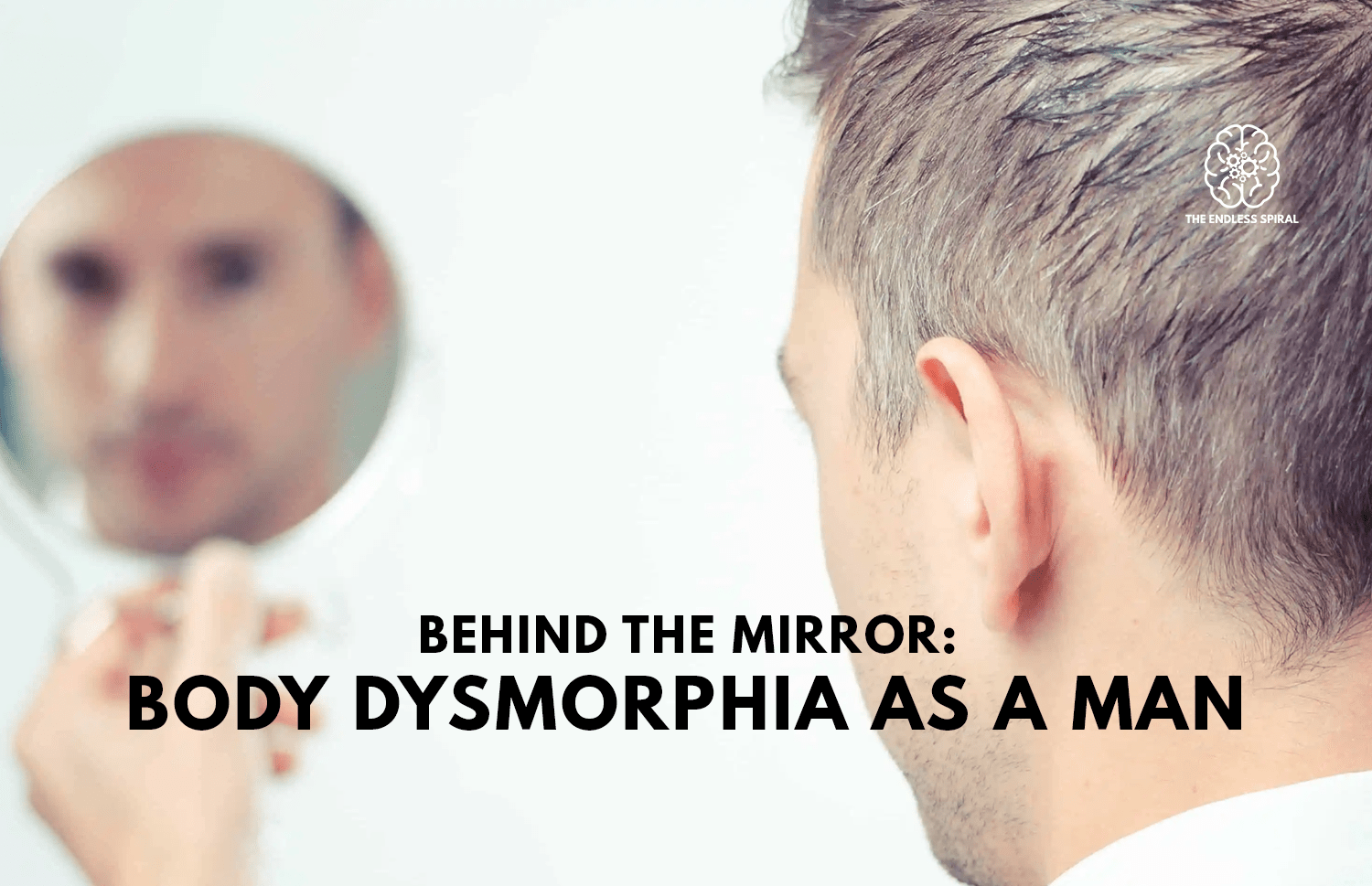

Body dysmorphia (BDD) isn’t just a women’s issue. Men struggle with it too. Let’s take a look into what BDD is for men, the impact it has, and offers hope through a my own personal story.
We all have those days where we stand in front of the mirror and don’t like what we see. But what if that criticism becomes an obsession, consuming your thoughts and dictating your life? That’s the reality for many living with body dysmorphia (BDD).
What is Body Dysmorphic Disorder (BDD)?
BDD is a mental health condition characterised by a persistent and unrelenting preoccupation with perceived flaws in physical appearance. These flaws are often minor or even unnoticeable to others, but for someone with BDD, they become magnified and a source of immense distress.
How Does BDD Manifest in Men?
While BDD can focus on any body part, for men, some common areas of fixation include:
- Muscle Dysmorphia (Bigorexia): A preoccupation with being insufficiently muscular, even when already quite built.
- Body Shape: Having a fixation on your body shape even though its genetics.
- Height: Feeling unacceptably short.
- Skin Concerns: Obsessing over acne, scars, or wrinkles.
- Hair Loss: Fear of balding or thinning hair.
- Genitals: Anxiety about size or shape.
Living with BDD: My Story
For years, the mirror was my enemy. I saw a scared, lost, troubled, sad, confused person staring back.
I had an obsession with how I looked. When I saw myself in the mirror or reflextion in a shop window the underlining feeling I had was, ” im not good enough.” That came from my childhood buts that a story for another day.
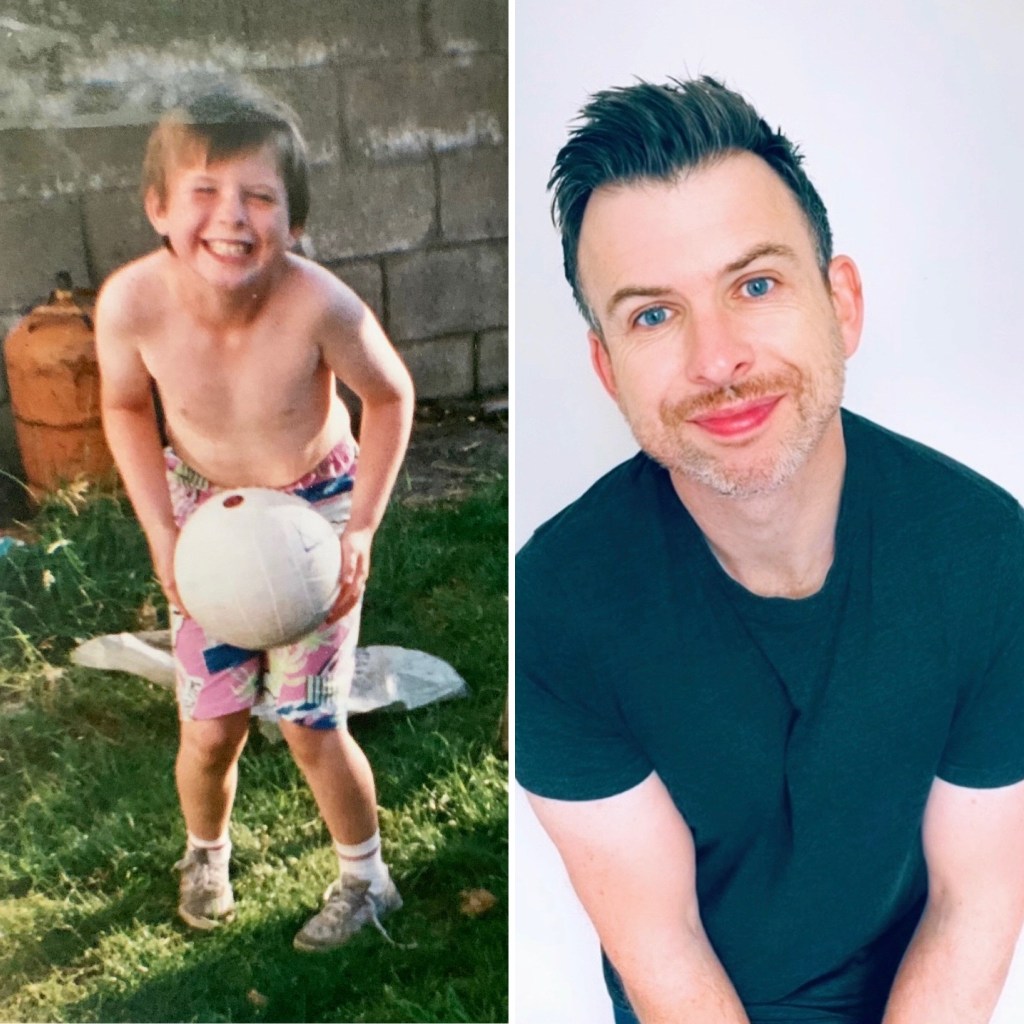
I skipped social events, avoided swimming pools, and wore baggy clothes to hide my perceived flaws. I didn’t want to socialise or see friends and family. The more I focused on my “imperfections,” the bigger they seemed to become in my mind. This went on for over 25 years.
The Vicious Cycle of BDD
Here’s a glimpse into the vicious Spiral I was trapped in:
- Obsessive Checking: Spending hours a day examining myself in the mirror, obsessing over perceived flaws.
- Compulsive Camouflage: Wearing baggy clothes, turning or standing a certain way, growing a beard, hiding from pictures.
- Negative Self-Talk: A constant barrage of self-criticism, comparing myself to others, controlling food, excessive exercising and binging to dull the negative voice in my head.
- Social Isolation: Avoiding situations where I might be judged, like swimming or putting myself on show, hiding away from friends and social events.
Breaking Free from the Mirror Prison
It wasn’t easy, but I finally started seeking help. Therapy helped me challenge my negative thoughts and develop coping mechanisms. I learned to focus on my body’s strengths and appreciate its capabilities, not just its aesthetics.
My Journey to Body Positivity
It’s a daily practice, but I eventually started to build a healthier relationship with my body. Here are some things that helped me:
- Focusing on Fitness, not Size: I shifted my mindset from obsession with changing the way I look to enjoying exercise for its health benefits.
- Challenging Negative Thoughts: When the negativity creeps in, I identify the distorted thought and replace it with a more realistic one.
- Practicing Self-Compassion: I treat myself with kindness and understanding, just like I would a friend.
Hope for Others Struggling with BDD
You’re not alone. Body dysmorphia is a real condition that affects men too. If you recognize yourself in this story, please don’t suffer in silence.
Here are some resources that can help:

If you or someone you know needs mental health support in Ireland, here are some extra resources:
BodyWhys – the Eating Disorders Association of Ireland, is the national voluntary organisation supporting people affected by eating disorders.
Aware – Offers support, information, and education on depression, bipolar disorder, and related conditions. Visit their website: Aware
Pieta House – Provides free therapeutic services for those in suicidal distress or engaging in self-harm. Learn more: Pieta House
Samaritans – Offers a helpline for emotional support, available 24/7. Visit their website: Samaritans Ireland
Remember, reaching out for help is a sign of strength, and these organisations are here to support you.
Remember, recovery is possible. By seeking help and practicing self-compassion, you can break free from the mirror prison and learn to appreciate your body for the amazing things it can do.
Follow Keith on Social Media
Discover more from The Endless Spiral
Subscribe to get the latest posts sent to your email.
 The Endless Spiral
One thought on “Behind the Mirror: Body Dysmorphia as a Man”
Comments are closed.